Everyday Hydration Habits: From Morning Sips to All-Day Energy
Most people know they feel better when they drink enough, yet busy mornings, back‑to‑back meetings, and hot afternoons often pass with only a few rushed sips. Subtle tiredness, slower thinking, and “off” moods can quietly connect to what is, or is not, in your cup throughout the day.
When The Glass Stays Full But You Do Not Feel Your Best
The body usually gives quiet signals when it is running lower on fluids, long before strong thirst hits. A dry mouth, darker urine, or a dull, background headache are common early signs. Muscles may cramp more easily, exercise can feel heavier, and it can take less effort than usual to feel worn out.
Some people notice feeling light‑headed when standing up quickly or more sluggish when moving around. Skin and lips can feel drier even when the weather looks the same. These changes are often easy to blame on poor sleep or “just a long day,” so they slip by unnoticed.
Thinking can feel different too. That mid‑afternoon stretch when it is harder to concentrate, follow a conversation, or remember small tasks is not always about food or willpower. A small drop in fluid levels can make the brain feel slightly foggy, and decisions may feel slower or more effortful.
Fluid balance also plays into how the body handles glucose. When the body is a little dried out, blood sugar can run higher, which may leave energy levels more up‑and‑down, even if meals have not changed. That mix of low motivation, irritability, and “out of fuel” tiredness often overlaps with days when drinking has slipped.
Everyday patterns can keep this cycle going: relying heavily on coffee or sweet drinks and forgetting to sip between tasks. One simple check is urine color: a pale straw shade usually suggests better hydration, while a much darker tone often means it may help to drink. Gentle, regular sipping through the day tends to support comfort and focus more than one large drink at night.
Setting Up The First Hours Of The Day
A simple drink to start the morning
After several hours asleep, most people wake up a little low on fluids. A modest glass of water soon after getting out of bed can gently replace what was lost overnight. Plain water at a comfortable temperature is enough for many.
Linking that first drink to something you already do helps it stick. Some people keep a small glass on the bedside table and drink before opening their phone. Others prefer to drink after brushing their teeth or while making breakfast.
There is no need to force a large volume. A small to moderate amount is usually a reasonable start. The aim is to wake the body up, not to drink so much that the stomach feels full or uncomfortable.
Building “sip cues” into the morning
As the morning goes on, you can “front‑load” a bit more fluid without tracking exact amounts. One way is to attach a few mouthfuls of water to tasks you already do: sitting down at your desk, finishing a call, standing up to stretch, or returning from the restroom.
These tiny “sip cues” spread intake into regular, manageable portions and reduce the chance of waiting until dry mouth, a dull headache, or strong thirst shows up. Many people find that regular, modest sips support steadier comfort and attention than trying to catch up with a large drink later in the afternoon.
Personal taste matters. Some prefer plain water, others like unsweetened tea or other low‑sugar options. Lightly flavouring water with a slice of citrus or a few pieces of fruit can make those small, frequent drinks more enjoyable.
| Morning pattern idea | What it looks like in practice |
|---|---|
| Bedside glass habit | Drink a small glass after silencing your alarm |
| Sink or kettle cue | Drink while the kettle boils or after brushing your teeth |
| Desk “log‑in” sip | Take several mouthfuls as you open your laptop |
Making Workdays And Errands Easier On Your Body
Long stretches at a desk, in a car, or running between tasks can easily turn into “forget to drink” days. Instead of chasing a strict daily target, it often helps to design the space around you so that drinking becomes the easy default rather than something you have to remember.
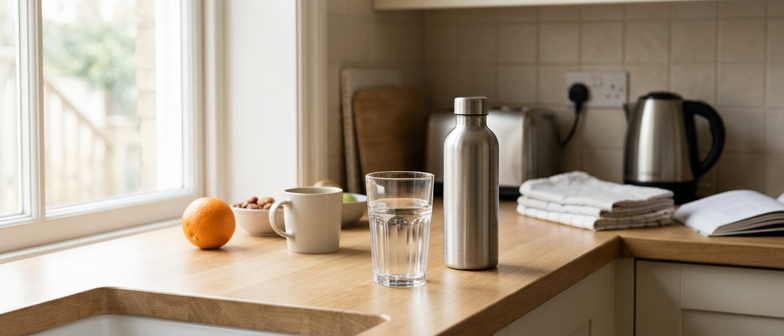
Keeping a bottle or glass within sight, rather than buried in a bag or drawer, is a simple step. Refill it whenever you get up for a break, visit the restroom, or grab a snack. Linking water to actions you already take during the day reduces the need for willpower or tracking apps.
You can lightly “bookend” regular tasks as well. Before opening your inbox, sip. After sending a batch of messages, sip again. Before a meeting starts, take a drink; when it ends, repeat. These small, repeated actions can add up across a workday without feeling like a chore.
If plain water feels unappealing, small changes can help. Adding a slice of citrus, cucumber, or a few pieces of other fruit can add gentle flavour. Unsweetened tea or diluted juice may also contribute to overall fluid intake for many people.
Outside of work, a simple rhythm works well for a lot of people: a few sips on waking, some with each meal, and a little before and after movement or exercise. A lightweight bottle in your bag or car supports drinking on commutes or errands. At home, placing water where you naturally sit or relax—beside the sofa, on the kitchen counter, near the bed—turns “I will drink later” into “it is already here.”
On very busy days, aiming for “better” instead of “perfect” can keep things realistic. Swapping one sugary drink for water or including water‑rich fruit and vegetables are ways to support fluid intake.
| Situation | More thirst‑friendly choice | When it may be useful |
|---|---|---|
| Afternoon energy dip at work | Water or unsweetened tea instead of another very sweet drink | When you want steadier comfort without a sugar high |
| Long drive or commute | Refillable bottle with plain or lightly flavoured water | When restroom stops are planned but not frequent |
Staying Comfortable When Temperatures Rise
Cooling off in a gentle way
On very warm days, almost any cold drink can feel appealing. Icy options can be refreshing, yet very large, extremely cold drinks may sometimes leave some people with a brief stomach ache or mild headache. Taking smaller, steady sips can be easier on the body than quickly finishing a huge cup at once.
Cool or slightly chilled water is often enough to feel refreshed. When plain water starts to feel repetitive, adding slices of fruit or a small splash of juice can give light flavour without making the drink very heavy. Lightly chilled herbal infusions are another option that some people enjoy in the afternoon or evening.
Clothing, shade, and rest breaks matter too, but paying attention to what and how you drink is a quiet way to support comfort in hot conditions. Tuning in to early hints such as dry mouth, darker urine, or heavier tiredness can help you adjust before the heat feels overwhelming.
Looking again at sweet and caffeinated options
On hot days, sweet iced drinks and fizzy sodas often become tempting go‑tos. They taste good and can feel instantly satisfying, which makes them easy to drink quickly and in larger amounts. This can lead to taking in far more sugar than expected, which may leave some people feeling heavy, thirsty again soon after, or uncomfortable.
For many, it can be more sustainable to treat very sugary drinks as small, occasional extras and to pair them with water. You might sip water first to take the edge off thirst, then enjoy a smaller portion of a sweet drink slowly.
Caffeinated drinks, such as strong iced coffee or tea, can fit into daily routines for many people. However, they are not always the most reliable way to cover fluid needs. Spreading them across the day and matching each one with a glass of water can make them feel more balanced.
Listening to your body’s early warning signs is useful here too. If your mouth feels dry, urine looks much darker than usual, or your energy and mood are dipping during hot weather, it may help to pause and consider what you have been drinking. Small adjustments—like one extra glass of water between caffeinated or sweet drinks, or slightly downsizing portion sizes—can support more comfortable afternoons and evenings when the temperature climbs.
Q&A
-
How can I build sustainable everyday hydration habits without constantly tracking milliliters?
Instead of chasing a fixed number, anchor drinking to routines you already do: after bathroom breaks, when you switch tasks, and with each meal or snack. Keep water visibly present where you work, rest, and commute. Over time, these small, repeatable actions become automatic habits that keep intake steady with very little mental effort. -
What are some simple water intake reminder ideas that do not rely on apps?
Use objects and moments as cues: a bright bottle on your desk, a sticky note on your monitor, or a glass next to your kettle. Decide that each email batch, phone call, or calendar alert doubles as a “sip signal.” Wristbands or rings you twist can also work as subtle physical prompts to take a drink. -
What does an effective morning hydration routine look like for busy schedules?
A practical routine might start with a small glass on waking, followed by a few sips after tooth‑brushing and again when you open your laptop or leave home. The focus is on two or three predictable touchpoints rather than volume. Choosing comfortable temperatures and flavors encourages consistency even on rushed mornings. -
How are hydration and energy levels linked during office hours?
Mild dehydration can make concentration feel harder, increase perceived effort, and contribute to afternoon slumps. Regular, moderate sipping often supports more stable alertness than relying on repeated sugary or highly caffeinated drinks. Pairing coffee or tea with water, and checking urine color, helps keep energy and mood more even across long workdays. -
What healthy beverage swap tips work for summer hydration and office wellness drink choices?
For summer, prioritize cool water, lightly flavored infusions, or diluted juice instead of large sugary sodas. In the office, rotate unsweetened tea, sparkling water, or fruit‑infused pitchers in shared spaces. Start with one daily swap, such as replacing the second soda with water plus lemon, to reduce sugar while keeping drinks enjoyable.