Windshield Wiper Maintenance Guide for Clear Road Visibility
When rain, road spray, or light snow hit, worn wipers quickly turn driving into a strain. This Windshield Wiper Maintenance Guide helps you recognize blade wear, replace windshield wipers safely, choose washer fluid, and handle streaky wiper problems so visibility stays more consistent in changing weather.
Why Windshield Wiper Maintenance Matters
A clear windshield is one of the most basic needs for confident driving in wet or changing weather, and that is where a simple Windshield Wiper Maintenance Guide becomes useful. When wiper blades are in good condition, they help remove rain, light snow, road spray, and small debris so you can better see lane markings, vehicles, and obstacles. Consistent care supports rain driving visibility by reducing distracting smears or missed spots across the glass. While wipers are only one part of overall driving safety, keeping them working properly can make trips in bad weather feel more manageable and less tiring.
Regular attention to your wipers also helps you plan ahead for different seasons instead of reacting when the first storm hits. Seasonal wiper care, such as checking rubber flexibility in winter and watching for sun damage in summer, can extend the life of the blades and reduce sudden performance problems. This chapter sets the stage for the rest of the guide by explaining why even a small component like a wiper blade deserves a place in your routine vehicle maintenance. Understanding the role of wipers in visibility makes it easier to decide when to inspect, service, or replace them before conditions become more demanding.
How to Inspect Your Wiper Blades
Regular wiper blade inspection is a key part of any windshield wiper maintenance guide because it directly affects what you can see in rain and road spray. With the wipers in the parked position, check the rubber edge of each blade for cracks, splits, missing pieces, hardened spots, or curled sections that prevent even contact with the glass. Then look at the metal or plastic frame for bent arms, loose joints, or corrosion that could stop the blade from sweeping smoothly across the windshield.
After the visual check, test the blades so you can troubleshoot streaky wiper performance before it harms rain driving visibility. Spray windshield washer fluid or use the vehicle’s washer system, then run the wipers at low and medium speeds. Watch for streaks, missed areas, chattering, or squealing that remain once the glass is clean. Persistent haze, lines, or wet patches usually point to worn rubber or uneven pressure, and if only one side leaves marks, the issue may be limited to that particular blade or arm.
During inspection, notice how quickly the wipers clear water and how stable they feel as they move. If the blades judder across the glass, skip parts of the windshield, or struggle to clear normal rainfall, they may be near the end of their service life even if the rubber still looks acceptable. Use these checks to decide when to replace the wipers so the windshield stays clear and visibility in wet weather remains consistent.
| Inspection Point | Observed Symptom | Likely Condition | Impact on Wet-Weather Visibility |
|---|---|---|---|
| Rubber edge surface | Cracks, splits, or missing sections | Severely worn blade | Rain clearing reliability very low |
| Rubber flexibility and shape | Hardened, curled, or uneven contact | Aging or heat-damaged rubber | Inconsistent wipe, moderate risk |
| Wiper frame and arm | Bent, loose, or corroded hardware | Compromised pressure on glass | Uneven sweep, localized blind spots |
| Sweep pattern during washer use | Streaks, haze, or missed patches | Edge contamination or wear | Reduced clarity, distracting smears |
| Movement and sound at low speed | Chattering, squealing, or judder | Poor contact or alignment | Visibility fluctuates, driver discomfort |
| Water clearance speed | Slow clearing in normal rainfall | Blades near end of service life | Overall visibility stability at risk |
Common Signs Your Wipers Need Attention
One of the clearest signs you need a wiper blade inspection is a streaky or patchy sweep across the glass. If the blades leave bands of water, haze, or missed areas instead of a clean wipe, the rubber is likely worn or contaminated. Streaky wiper troubleshooting should start with cleaning the blades and windshield, but persistent streaks usually mean the edge has lost its shape and the blades are near the end of their service life.
You may need to replace windshield wipers if they chatter, skip, or squeak as they move across the windshield. These noises can signal uneven pressure, bent arms, or rubber that has become brittle from age or weather. Visible cracks, missing pieces of rubber, or blades that fail to stay in full contact with the glass are further signs the wipers no longer work reliably and should be replaced.
When and How to Replace Windshield Wipers
In any practical Windshield Wiper Maintenance Guide, knowing when to replace windshield wipers is essential for safe visibility. Many drivers only consider new blades when they see streaks, missed areas, or hear chattering across the glass, but rubber also hardens and cracks from sun, temperature changes, and grime. As part of basic streaky wiper troubleshooting, cleaning the blades and windshield can help, yet persistent smearing, squeaking, or a hazy film usually means the blades are worn. A quick wiper blade inspection for tears, flat spots, or uneven wear supports timely replacement before performance drops in heavy rain.
When you have decided to replace windshield wipers, focus on getting the right fit rather than chasing a particular brand. Your owner’s manual, the existing blade size, or fitment guides at parts counters can help you match length, attachment style, and blade type. Conventional frame, beam, and hybrid designs all aim for even pressure on the glass, so choosing a style similar to the original equipment is usually reliable. As part of routine inspection, confirm that the driver, passenger, and any rear wiper are all replaced with correct sizes, and make sure the new blades sit flat and connect properly to the arms to reduce streaking.
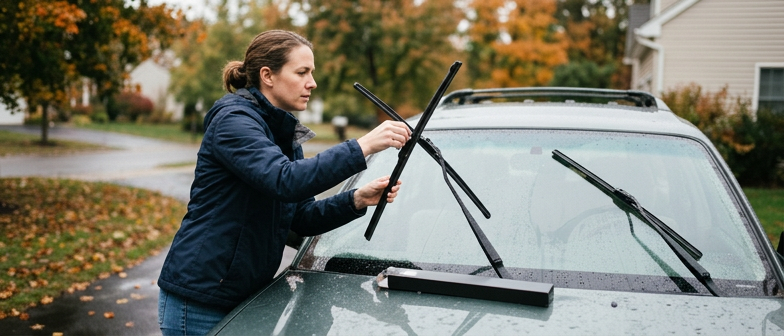
The replacement process is usually simple but benefits from a careful, step-by-step approach. Lift the wiper arm away from the windshield, release the tab or clip, and slide the old blade off the hook or pin while supporting the arm so it does not snap back onto the glass. Align the new blade with the connector, lock it into place, and gently pull to confirm it is secure. After installing both sides, lower the arms and test them with windshield washer fluid to check for smooth motion and even contact. If streaks remain, recheck that each blade is fully latched, clean the glass, and confirm the arms are straight before assuming another part has failed.
Basic Steps for Safe Wiper Replacement
To replace windshield wipers safely as part of a Windshield Wiper Maintenance Guide, switch off the ignition, lift one wiper arm from the glass, and support it so the spring‑loaded arm cannot snap back and chip the windshield. Press or slide the release tab or locking clip, then pull the old blade off the hook or connector and set it aside. Align the new blade with the same connector, push until it clicks securely, and tug lightly to confirm it is locked. Lower the arm onto the glass in a controlled way, repeat for the other side, then spray washer fluid and run the wipers to check for smooth, clear wiping before driving.
Washer Fluid and Clean Windshields
Windshield washer fluid is a core part of any Windshield Wiper Maintenance Guide because it helps wiper blades clear dirt, bugs, and road film instead of smearing them across the glass. Use washer fluid formulated for cars rather than plain water to improve cleaning and reduce the risk of freezing in cold weather. Choose a mix that suits your climate, such as a winter formula that resists ice or a solution that cuts heavy grime, and check the reservoir regularly, especially before long trips or wet seasons. Keeping it topped up ensures a strong spray pattern so the fluid and wipers work together to maintain good rain driving visibility and give the blades a clean, lubricated surface.
Clean glass and clean blades are just as important as having enough washer fluid. Even fresh wipers can leave streaks if the windshield is coated with oil, pollen, or mineral spots, so washing the glass with a proper cleaner supports clear vision and overall wiper performance. Gently wiping the rubber edges of the blades with a damp cloth removes grit that can scratch the glass and cause chatter. By pairing suitable washer fluid with regular cleaning of the windshield and wiper blades, you create a simple routine that keeps the viewing area clear in wet weather and helps your wipers stay dependable in everyday driving.
Q&A
-
Why does regular windshield wiper maintenance matter for rainy driving visibility?
Clean, effective wipers remove rain, light snow, and road spray so lane markings, vehicles, and obstacles stay clearer and you can react sooner in bad weather. -
How can I inspect my wiper blades to see if they are still safe to use?
Look at the rubber edge for cracks, missing pieces, hard or curled sections, and check the frame for bent parts, loose joints, or corrosion that can cause poor contact with the glass. -
What are common signs that it is time to replace windshield wipers?
Persistent streaks, chattering, skipping, or a cloudy film after wiping usually mean the rubber is worn or hardened and the blades should be replaced before heavy rain. -
How do I safely swap out old wiper blades for new ones?
Turn off the ignition, lift each arm and support it, release the connector, slide off the old blade, click the new one in place, then test with windshield washer fluid for a smooth sweep. -
What role does washer fluid play in seasonal wiper care?
Use automotive windshield washer fluid suited to the season to remove dirt and insects, reduce freezing in winter, and give the blades a cleaner, lubricated surface.