Building a Tire Pressure Check Routine for Safer, More Efficient Driving
A steady tire pressure check routine helps your car feel predictable, handle daily driving, and use fuel efficiently. This guide walks through step‑by‑step checks, seasonal tire care, and what dashboard warning lights mean so you can fit tire maintenance into a regular vehicle care schedule.
Why Tire Pressure Checks Matter
A consistent tire pressure check routine is a simple way to keep your vehicle predictable and comfortable. When tires are inflated near the manufacturer’s recommended pressure, the tread contacts the road more evenly, which supports better braking and steering in everyday driving. Underinflated tires flex more, build extra heat, and overwork the sidewalls, while overinflated tires reduce the contact patch, grip, and ride comfort. Regular car tire maintenance that includes pressure checks also helps catch slow leaks, uneven wear, and premature damage. It supports safe driving preparation by giving you a moment to spot nails, cuts, or bulges before they cause trouble. For most drivers, checking pressures once a month, and before long trips, fits naturally into a basic vehicle maintenance schedule.
Correct inflation is also part of fuel efficiency basics. When pressure drops, the tire deforms more and creates extra rolling resistance, so the engine must work harder and use more fuel, especially on highways or with heavy loads. Seasonal tire care matters because temperature swings can change pressure even when the tire is otherwise fine. Making pressure checks a habit when the weather shifts keeps handling and fuel use more consistent and reduces the chance that you rely only on a dashboard warning light or an obvious problem before taking action.
Building a Practical Tire Pressure Check Routine
A practical tire pressure check routine works best when it is simple, repeatable, and tied to everyday driving habits. Choose a schedule that fits your overall vehicle maintenance plan, such as checking once a month and before long highway trips. Many drivers use fueling stops as a reminder, especially when an air pump is available, or link the habit to regular tasks like monthly planning. Treat tire checks as part of safe driving preparation, alongside confirming fuel and visibility, rather than a complicated mechanical job.
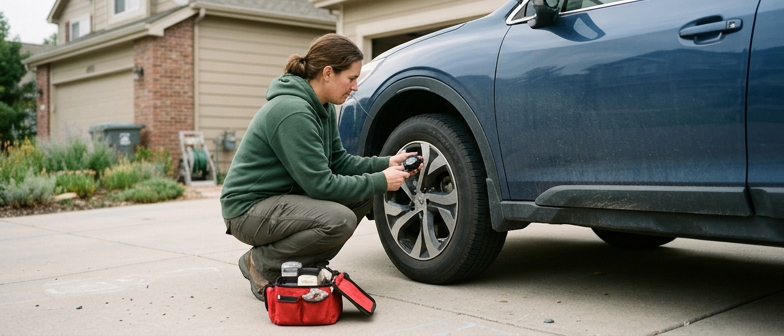
To follow this routine, keep a reliable tire pressure gauge, access to an air source, and your vehicle’s recommended pressure values, usually listed on the driver’s door jamb. When the tires are cold, remove each valve cap, place the gauge firmly on the valve, and note the reading. Compare it with the recommended value, add air in small steps, and recheck so you do not overinflate. Include the spare tire when you can reach it easily, because a flat spare can disrupt roadside plans. Many cars and trucks specify different pressures for front and rear tires, so confirm you are using the correct number at each position and replace valve caps securely when you finish.
Because driving conditions change across the year, build seasonal adjustments into your Tire Pressure Check Routine and broader car tire maintenance. In colder weather, pressures drop, so increase how often you inspect them, especially at the start of a cold spell. In hotter months, long drives can raise pressure, so stay within the recommended range even if a parked tire appears slightly low. Dashboard warning lights and tire pressure monitoring systems help signal serious issues, but they should support, not replace, manual checks. Adding pressure checks to your regular Vehicle Maintenance Schedule, along with tread inspections or rotations, keeps handling predictable and supports basic fuel efficiency while making tire care a normal part of owning and preparing a safe car.
| Routine Step | When to Do It | Key Action | Maintenance Link |
|---|---|---|---|
| Monthly pressure check | Same week each month | Measure all tires cold | Align with Vehicle Maintenance Schedule |
| Pre-trip inspection | Before long highway drives | Adjust to recommended pressure | Part of Safe Driving Preparation |
| Seasonal adjustment | At start of major temperature changes | Increase check frequency | Supports Seasonal Tire Care |
| Fuel stop quick check | During routine refueling | Spot obvious underinflation | Reinforces Tire Pressure Check Routine |
| Spare tire check | When trunk or cargo area is accessible | Confirm spare is usable | Integrate into Car Tire Maintenance |
| Dashboard light follow-up | When TPMS warning appears | Verify with manual gauge | Keeps Vehicle Maintenance Schedule on track |
How to Check Tire Pressure Step by Step
A consistent tire pressure check routine starts with finding the recommended pressure on the label inside the driver’s door or in the owner’s manual, not on the tire sidewall. Let the car sit so the tires are cool, then remove the valve cap and press a quality gauge straight onto the valve stem. Compare the reading with the recommendation, add air in short bursts if it is low, or briefly release air if it is slightly high. Recheck until you are close to the target, and repeat for all four tires and the spare as part of basic car tire maintenance.
As you follow this routine, avoid relying only on how the tires look, because they can be underinflated enough to affect safety without seeming flat. Use the same gauge when possible so readings stay consistent. If a dashboard warning light from the tire pressure monitoring system turns on, confirm each tire with your gauge, especially after sudden temperature changes, and add these checks to your regular vehicle maintenance schedule.
Seasonal Tire Care and Changing Conditions
Seasonal tire care is closely tied to your regular tire pressure check routine because temperature changes affect how much air is in each tire. As weather shifts from hot to cold or back again, the air inside the tires expands or contracts, which can move pressure away from the level recommended on the vehicle’s door jamb sticker. In colder months, tire pressure often drops enough to trigger dashboard warning lights, while in warmer months, long highway drives and hot pavement can push pressure higher than expected. Checking pressure at least once a month, and before long trips or major weather changes, supports safe driving preparation and helps you spot small issues before they affect handling or cause uneven wear. For many drivers, this seasonal routine becomes part of a broader car tire maintenance habit that keeps the vehicle predictable and comfortable throughout the year.
Changing seasons also guide how often you look at tread depth, sidewalls, and valve stems, and how you think about fuel efficiency basics as part of tire care. In winter, underinflated tires may feel sluggish and can make it harder for safety systems to work properly, while in summer, significantly overinflated tires may have a smaller contact patch and feel harsh over bumps. Maintaining the pressure recommended by the manufacturer, instead of guessing or using the maximum pressure printed on the tire, supports steady fuel use and consistent grip on wet, icy, or hot roads. Drivers who plan ahead often add tire checks to their vehicle maintenance schedule, such as inspecting pressure and tread before the first freeze, before heavy rain, or before long vacation drives.
Adapting Tire Pressure Checks to Weather and Vehicle Type
Seasonal tire care shapes how you handle your tire pressure check routine. In hot weather, measure pressure early, before driving, because heat raises readings. In cold months, pressure drops and dashboard warning lights often appear overnight. As part of basic car tire maintenance, check every few weeks during seasonal changes and before long trips, and set pressures to the values on the driver’s door jamb or in the owner’s manual, not the tire sidewall.
Your vehicle maintenance schedule should reflect how sedans, SUVs, and light trucks respond differently to pressure changes. Sedans and compact cars with lower recommended pressures may develop uneven tread wear when underinflated. Heavier SUVs and crossovers need regular checks to stay stable when fully loaded or towing. Light trucks and work vehicles often require different pressures for empty versus loaded use, so recheck them whenever cargo or towing conditions change.
Understanding Dashboard Warning Lights and Tire Issues
Modern vehicles use dashboard warning lights, especially the tire pressure monitoring system (TPMS), to give early notice of possible tire problems. When the light comes on, it usually means at least one tire is underinflated compared with the recommended setting, though overinflation is also possible. Because low pressure can affect how the car handles, treat the TPMS symbol as a reminder to follow your regular tire pressure check routine and stay on top of basic car tire maintenance, not as a reason to panic. The light often appears after a temperature drop, long highway driving, or a slow leak, and its purpose is simply to support safe driving preparation by encouraging you to check the tires as part of your normal vehicle maintenance habits.
When the tire warning symbol appears, find a safe place to stop and measure each tire with a reliable gauge, then compare the readings to the values on the driver’s door label or in the owner’s manual. One low tire may suggest a small puncture needing prompt professional inspection, while all four being slightly low often points to recent weather changes or normal pressure loss. After inflating to the recommended level, the light usually turns off after a short drive, confirming that your tire pressure routine fixed the immediate issue. If the light flashes and then stays on, or remains lit even after you set all pressures correctly, the TPMS itself may need service as part of your broader vehicle maintenance schedule. Until it is checked, relying on manual pressure checks before longer trips helps you use dashboard warning lights as a practical tool for safe driving preparation instead of treating every alert as an emergency.
Q&A
-
How often should tire pressure checks be part of my vehicle maintenance schedule?
Include tire pressure checks at least once a month and before long trips. If you drive daily, tow, or carry heavy loads, checking every few weeks supports safe driving preparation and fits a regular vehicle maintenance schedule. -
What is a simple, safe routine for checking tire pressure?
Check when tires are cool, use a reliable gauge on each valve stem, compare readings with the label inside the driver’s door or the owner’s manual, then add or release air as needed and replace the valve caps. -
How does tire pressure relate to basic fuel efficiency?
Underinflated tires increase rolling resistance and can require more fuel. Keeping pressure close to the recommended setting supports efficient operation without guaranteeing a specific fuel savings amount. -
What tire care steps should I take when seasons change?
As temperatures rise or fall, recheck all tires, including the spare, at least monthly. Restore recommended pressures and watch for uneven wear, cracks, or bulges that may appear with seasonal changes. -
What should I do when a tire pressure warning light comes on?
Treat the dashboard warning light as a signal to stop when practical, check all tires with a gauge, and adjust or repair them. If the light stays on or a tire looks damaged, see a qualified service professional.